
How Often Should You Apply Washroom Sanitiser? A Cleaning Schedule Guide
Keeping our washrooms clean and hygienic is an essential aspect of daily life, whether we're on the go or at home. In this guide, I'll walk you through the ins and outs of using washroom sanitiser, with a particular emphasis on understanding how often to apply it. If you're a bloke or a sheila aged between 30 to 60 living in Australia, this is exactly what you need to know. Let's dive into the specifics of washroom sanitisers and how to keep your toilets as clean as a whistle!
The Importance of Regularly Using Washroom Sanitiser
Washroom sanitisers have become an indispensable part of our cleanliness routine. Whether in a public lav or your own dunny at home, keeping everything sanitised is key to maintaining hygiene and health. Toilet seats, being high-contact surfaces, can harbour germs and bacteria, increasing the chance of exposure to viruses.
Why Use a Washroom Sanitiser?
- Protection Against Germs and Infections: Regular application of washroom sanitiser, especially on toilet seats, can significantly reduce the risk of infections. This is crucial in public restrooms where foot traffic is high, and users vary.
- Peace of Mind: Knowing your toilet seat is germ-free gives you peace of mind. No one wants to be worrying about what they might be picking up when using the facilities.
- Deodorizing and Freshness: Sanitisers often incorporate deodorising agents that leave the room fresh, masking funky odours and promoting a clean environment.
- Environmental Friendliness: Unlike paper covers, washroom sanitisers are waste-free. This suits those of us who are conscious about our environmental impact.
How Often Should You Use a Washroom Sanitiser?
The frequency of applying washroom sanitiser really depends on a few factors, including the type of facility and the amount of foot traffic. Let's break it down:
In Public Washrooms
In a busy public restroom, it is advisable to use a washroom sanitiser every time you use the facilities. It's a simple step that ensures cleanliness and reduces exposure to potential health risks. Places like shopping centres, airports, and stadiums see a lot of use, so err on the side of caution.
In Private Washrooms
In your private bathroom, washroom sanitisers don't need to be applied as frequently as in public spaces. Nevertheless, including them as part of your regular cleaning routine, perhaps a couple of times a week or more often if the household has higher traffic or if someone's feeling a tad under the weather, is a good practice.
Creating a Cleaning Schedule
Developing a regular cleaning schedule for your washrooms can ensure that they remain in top shape, both in terms of cleanliness and hygiene. Here's a simple guide:
Daily Tasks
- Wipe down toilet seats with washroom sanitiser sprays after each use, especially in high-use situations.
- Ensure hand soap is always stocked to encourage proper hand hygiene.
Weekly Tasks
- Do a thorough clean of the entire washroom with disinfectant cleaners, including toilet bowls, seats, and sinks.
- Use washroom sanitiser on surrounding areas, such as flush buttons and door handles.
Monthly Tasks
- Conduct a deep clean of the washroom, removing any stubborn grime or build-up. For this, heavy-duty cleaners might be required.
- Check the condition of dispensers and replace if necessary.
Proper Use of Washroom Sanitisers
Proper usage is crucial for making the most of your sanitiser. Let's explore the steps involved in applying sanitiser effectively:
Using Toilet Seat Sanitiser Sprays
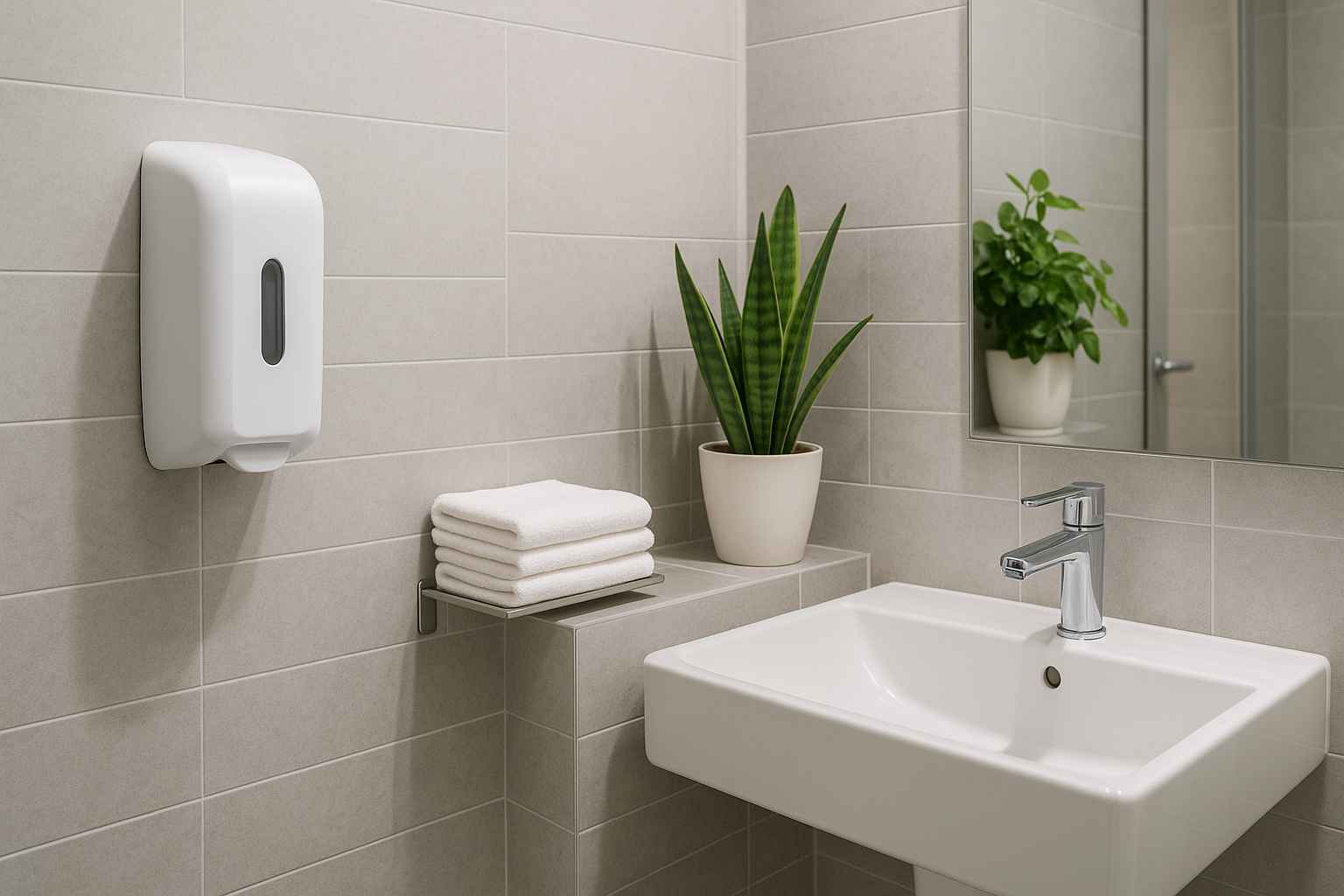
- Locate the Dispenser: The dispenser might be mounted on the wall of the cubicle or near the vanity.
- Spray the Seat: Ensure you cover the entire surface of the toilet seat with the sanitiser.
- Allow Time to Act: Leave the sanitiser for a few seconds to let it do its thing – killing off those pesky germs.
- Wipe Clean (Optional): You can use a tissue or paper towel if the product advises a wipe-down post application.
Automated Dispensers
These snazzy gadgets do most of the work for you. Simply activate them as per instructions, usually via a sensor or button.
Environmental Benefits of Washroom Sanitisers
Besides their role in maintaining hygiene, washroom sanitisers contribute positively to our environment. When compared to alternatives like paper seat covers, they dramatically reduce paper waste, making them a more sustainable choice. Additionally, many products are designed to be non-harmful to the ecosystem, further promoting environmental responsibility.
Conclusion
Using washroom sanitisers is an excellent habit to adopt for both public and private restrooms. They ensure a germ-free, hygienic environment, bringing peace of mind to all users. A regular schedule for sanitiser application flexibly suits various washroom types and foot traffic levels, and offers significant protection against health risks. Lastly, their sustainable use underlines a broader commitment to environmental care.
Remember, keeping clean is an ongoing commitment. So, take these tips on board, incorporate them into your routine, and you'll maintain a washroom that's not only hygienic but also welcoming to every user.