
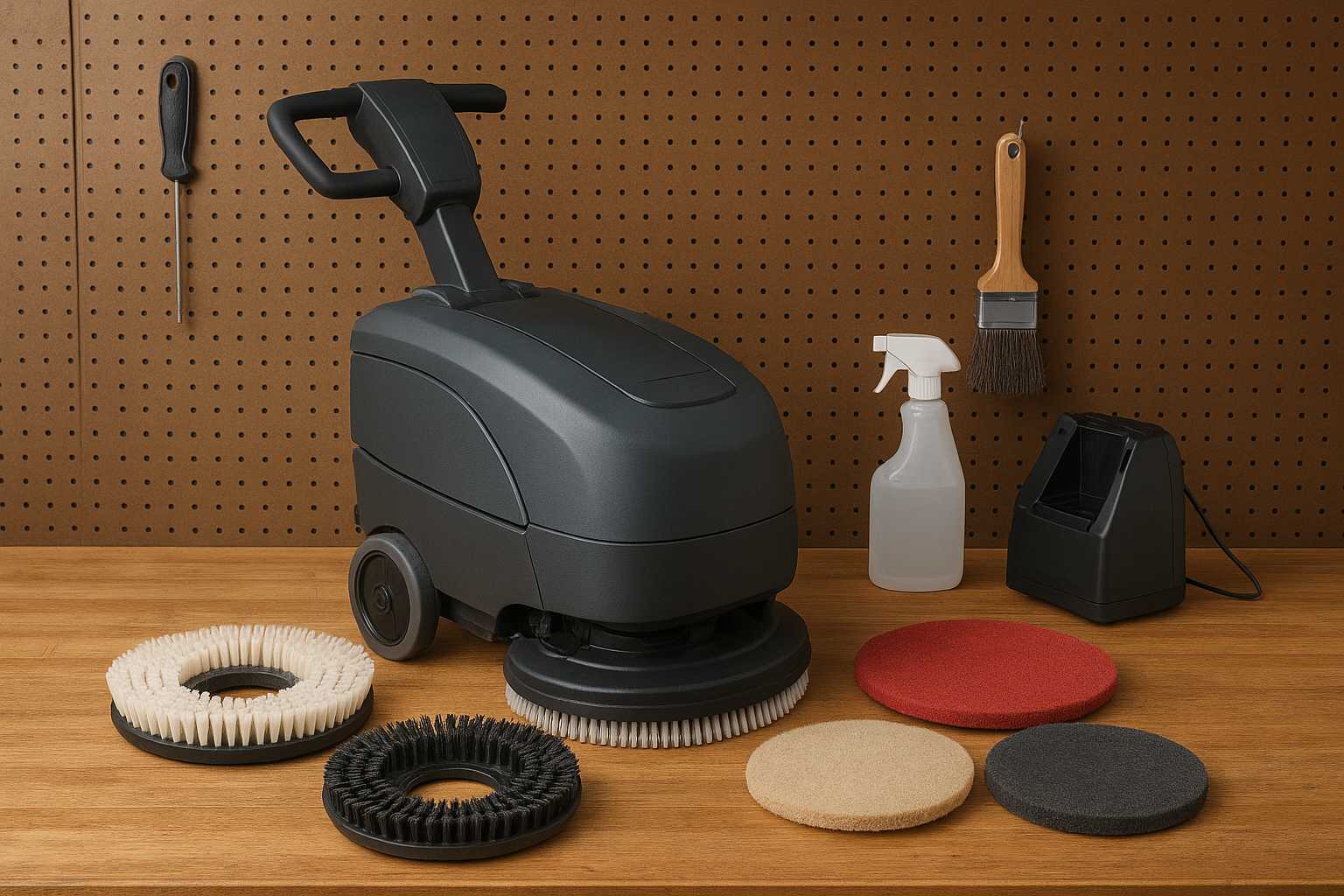
How to Clean and Maintain Floor Scrubber Brushes, Pads, and Squeegees for Optimal Performance
If you're using a battery-powered floor scrubber, you'll know they’re a real game changer when it comes to keeping large areas clean. However, like any piece of equipment, they need a bit of love and attention to keep them running smoothly. This guide will take you through how to maintain a battery floor scrubber to ensure your machine's optimal performance.
Understanding Your Battery Floor Scrubber
Before diving into maintenance, it’s essential to understand your machine a bit better. A floor scrubber is equipped with brushes, floor pads, and squeegees that do the dirty work. Regular cleaning and maintenance of these components are vital, not just for cleanliness but for the machine's efficiency and longevity.
Setting Up for Success: Pre-Use Checks
Battery Checks
- Battery Type Awareness: Identify if your machine uses wet flooded, gel, AGM, or lithium-ion batteries. This determines the specific maintenance it requires.
- Charge Level: Make sure the battery is fully charged. Don’t overcharge, especially if the charge is already above 20% unless specified by the machine manual.
- Terminal Inspection: Check for corrosion on battery terminals and ensure connections are tight. A quick clean with a wire brush and baking soda solution can prevent future issues.
- Water Level: If you have wet flooded batteries, check the water level weekly. Top up with distilled water to keep the electrolyte above the lead plates.
Drain and Debris Checks
- Hose Examination: Check the vacuum and drain hose for any blockages or leaks. Backflush with clean water if necessary.
- Debris Tray: Empty the tray regularly to prevent blockages, mould, and bad odours.
Post-Use Care: Keeping the Machine Clean
Cleaning the Floor Pads and Brushes
After each use, remove the pads and brushes from the machine. Thoroughly wash them to prevent dirt from embedding itself into the fibres. Store them off the ground to keep them in top condition.
Drain and Clean Tanks
- Solution and Recovery Tanks: Drain water and cleaning solutions. Rinse with clean water and leave the recovery lid open to air dry.
- Float Shut-Off Filter: Clean this filter located inside the recovery tank with water, ensuring no blockages.
Battery Recharging
Use the recommended charger for your battery type and avoid overcharging. Ensure the area is well-ventilated when charging.
Daily and Routine Maintenance: A Regular Check-Up
General Machine Storage
- Store the machine in a dry, cool area, preferably with the squeegee and pad driver lifted off the floor.
- Drain fluids when storing the machine in freezing environments to avoid damage.
Weekly and Monthly Maintenance Tasks
- Leaks and Fasteners: Inspect and tighten any loose parts. Lubricate grease and pivot points with silicon spray or appropriate grease.
- Solution System Flush: Weekly, flush with hot water and detergent. Allow it to run briefly before draining and rinsing the next day.
Battery Health Checks
- Regular Inspections: Look for signs of wear, cracks, or corrosion.
- Terminal Cleaning: Clean with a wire brush and baking soda to prevent connectivity issues.
- Avoid Deep Discharges: Recharge when nearly at 20% to preserve battery life.
Efficient Usage Tips for Battery Longevity
- Optimize Speeds: Adjust the operation speed based on the cleaning task to conserve energy.
- Plan Cleaning Routes: Minimize overlapping areas to reduce energy use.
- Prevent Idle Battery Drain: Switch off the machine when not in immediate use.
Battery Maintenance Safety Measures
- Disconnect Batteries: Always unplug batteries before performing maintenance.
- Handle with Care: Use PPE, such as goggles and acid-resistant gloves, when handling batteries.
Conclusion
Regular maintenance of your battery-powered floor scrubber is the key to extending its life and maintaining its performance. By following these steps, you not only ensure optimal cleaning efficiency but also reduce the chances of unexpected breakdowns. Remember, a well-maintained scrubber is not only reliable but also economical over time. Put in the time and effort now to enjoy hassle-free cleaning in the future.